debtcare.ca

Category: Small Business Tax Deadline

  • 2019 Tax Deadline Around the Corner – Let’s Review Current Penalties and Interest

    The Canada Revenue Agency (CRA) tax deadline for the 2019 tax year is coming up quickly. Are you prepared?

    The deadline to file your 2019 income tax is April 30, 2020.

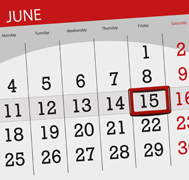
    For self-employed tax filers, the deadline is June 15, 2020, however, it’s better to file by April 30 as you will be charged interest from May 1 to June 15.

    It’s critical to meet the CRA filing deadline to avoid late-filing penalties, interest, and collection action — even if you can’t pay.

    Here’s what you need to know about the 2019 tax filing deadline:

    CRA Interest

    One reason why you want to file on time and pay what you owe in full (or look into alternative options) is to avoid CRA interest charges.

    If you have a balance owing for 2019 and don’t pay it in full, the CRA can begin charging you daily compound interest on May 1, 2020. This includes any balance owing if the CRA reassesses your return.

    If you are charged penalties, such as a late-filing penalty, the CRA can also charge interest on this amount.

    If you have amounts owing from previous years, the CRA will continue to charge daily compound interest on those, too.

    CRA interest rates change every three months.

    CRA Late-Filing Penalty

    If you owe money to the CRA and miss the tax filing deadline of April 30, 2020 (or June 15, 2020 for sole proprietors) you can be charged a late-filing penalty.

    In 2019, this penalty was 5% of your 2018 balance owing, plus 1% of your balance owing for each full month your return is late, up to a maximum of 12 months.

    If you’ve been charged a late-filing penalty in the past three years, you could be charged even more for missing the April 30, 2020 deadline — 10% of your balance owing, plus 2% of your balance for each full month your return is late, up to a maximum of 20 months.

    This is why, even if you can’t pay your full balance, it’s still best to file your return on time.

    Repeated Failure to Report Income Penalty

    If you failed to report an amount on your return for the 2019 tax year and you also failed to report an amount on your return for 2016, 2017, or 2018, you may be charged a repeated failure to report income penalty.

    If you did not report an amount of income of $500 or more for a tax year, it will be considered a failure to report income.

    The federal and provincial or territorial penalties are each equal to the lesser of:

    • 10% of the amount you failed to report on your return for 2019.
    • 50% of the difference between the understated tax (and/or overstated credits) related to the amount you failed to report and the amount of tax withheld related to the amount you failed to report.

    In some cases, if you voluntarily tell the CRA about an amount you failed to report, the CRA may waive these penalties. However, if you choose to go this route it is better to do so with an advocate on your side (like DebtCare!).

    False Statements or Omissions Penalty

    If you knowingly make a false statement or omission, or do so through gross negligence, you could be charged a penalty equal to the greater of:

    • $100
    • 50% of the understated tax and/or the overstated credits

    Again, in some cases, you can voluntarily tell the CRA about a false statement or omission and have the penalty waived. Again, it’s best to consult a debt counsellor first, such as DebtCare, before negotiating with the CRA.

    What To Do If You Owe Taxes But Can’t Pay

    As we’ve mentioned, if you know you will owe but can’t pay, it’s still important to file before the April 30, 2020 tax deadline.

    Don’t just hope that it will be overlooked or go away on its own – it won’t, and you’ll end up accruing more interest and penalties. In some cases, the CRA will waive the penalties or interest, but you will still owe the principal amount.

    Instead, make a plan for how you will pay what you owe.

    This could look like:

    • Making room in your budget to find the amount owing.
    • Taking out a personal loan that you can repay over a longer period and using the money to pay the CRA.
    • Consolidating debt.
    • Refinancing your mortgage.
    • And more.

    If you truly cannot pay, nor can you access a personal or debt consolidation loan, you can stop CRA collection action by filing for bankruptcy or for a consumer proposal.

    Get A Head Start By Contacting a Debt Counsellor

    At DebtCare Canada, we provide access to one of the only programs that can resolve a CRA back tax problem.

    Whether it’s personal income tax, HST, or payroll, DebtCare Canada can help! Get ahead of your tax problem. Reach out to us for a free consultation by calling 1-888-890-0888 or learn more about our CRA Tax Debt program at https://debtcare.ca/back-taxes/.

  • CRA Director Liability and You – Protect Yourself!

    CRA Director Liability and You – Protect Yourself!

    CRA Director Liability and You – Protect Yourself Before It’s Too Late!

    If you own, or are a director for, a company and accept trust money for the federal or provincial governments, you could be subject to CRA director’s liability.

    CRA Director Liability

    CRA director liability means that the Canada Revenue Agency (CRA) can decide that you owe a tax debt for your business – personally.

    Like anything, director’s liability is a process and there are ways that you can protect yourself if you’re assessed.

    Here’s what you need to know.

    What is CRA Director’s Liability?

    In Canada, incorporated businesses are considered separate legal entities from the owners’ personal assets and liabilities. If any debt is accrued by the incorporated business, the employees, officers, and directors are not held personally liable.

    However, this isn’t always the case – also known as director’s liability.

    If the CRA can’t collect an amount owing from the business directly, it may enforce director’s liability and assess the director, or directors, personally. This is most common with unremitted GST/HST trust money or unpaid payroll source deductions.

    What Happens if You Receive a Director’s Liability Assessment?

    If you are subject to director’s liability and can’t pay, the CRA might place liens on your assets, freeze your bank account, garnish wages, and more. And they can do this even if the corporation is no longer operating.

    If you are, or ever have been, the director of a corporation with a CRA tax problem, you need to act fast.

    How to Protect Yourself

    1. Do your due diligence.

    In the event that you are the subject of a director’s liability assessment, paperwork is your ally.

    If you can prove that you made your best efforts to have the corporation pay the GST/HST remittance or other deduction, then you may have a chance of having it overturned.

    According to Mondaq:

    “There is also a “due diligence” defence available to taxpayers who are assessed for CRA director liability by Revenue Canada. Subsections 227.1(3) of the Income Tax Act and 323(3) of the Excise Tax Act contain identical wording which states that a director is not liable for a corporation’s failure to collect GST/HST or Payroll Source Deductions if they “exercised the degree of care, diligence and skill to prevent the failure that a reasonably prudent person would have exercised in comparable circumstances”.

    However, this solution will likely require a tax lawyer and could end up costing more – especially if the circumstances cannot be proven.

    2. Make note of your resignation date.

    If you’ve resigned from the corporation, or are planning to resign, make sure the date is well-documented. This is because, in many cases, there has been a precedent set of a two-year limitation period.

    According to Lerners, many of the statutes that impose liability on a director have a two-year limitation period. For example, a claim for unpaid wages against a director under the Employment Standards Act, a claim for which there is no due diligence defence, cannot be made more than two years after a director resigns.

    However, if a director resigns on paper but continues to act like a director, then the two-year time limit is void. In addition, the resignation needs to be clearly stated. Lerners recommends being on the public record with your resignation and its effective date.

    “When government officials are considering an assessment against a director, the first place they check is the public record,” Lerners notes. “You do not want to be in the position where you receive a letter proposing to assess you personally when you resigned years before, but your resignation was never properly noted on the public record.”

    Again, this solution would most likely require a tax lawyer.

    3. Find solutions for the tax debt.

    There may be an event where you are being assessed for director’s liability and cannot afford to work with a tax lawyer or don’t have a defense available.

    In these cases, a CRA director liability assessment can be dealt with in the same ways as personal tax assessments: by making a plan for the debt.

    The CRA wants their money and you may have to pay it – so the solution becomes finding a way to raise the funds. This might include:

    • Taking out a secured loan.
    • Accessing home equity.
    • Insolvency options, like filing for a consumer proposal or personal bankruptcy.

    If you owe a director’s liability and know that you can’t pay it all, even if you use home equity or a loan, insolvency filing options may be the answer. When you file for a consumer proposal or personal bankruptcy, your unsecured debts — including tax debt — are included.

    This is the only way, besides paying the debt in full, to stop CRA collection action, such as requirements to pay, frozen bank accounts, and liens against your assets.

    Whether you decide to pursue litigation or deal with the CRA director liability tax debt directly, DebtCare Canada can help. We’ll go through your options and find the best way to stay protected.

    Do you have a CRA director liability, call 1-888-890-0888 or visit www.debtcare.ca for a free consultation.

  • 2018 Tax Deadline for Contractors Coming Up

    The 2018 tax deadline for sole proprietors and partnerships is on June 15, 2018. Have you filed yet?

    If not, don’t panic – you still have time. But it’s in your best interest to get your taxes filed by the deadline if you owe, or else you’ll be subject to Canada Revenue Agency (CRA) late-filing penalties, interest, and potentially worse consequences.

    The CRA late-filing penalty is 5% of your balance owing, plus 1% of your balance owing for each full month your return is late, up to a maximum of 12 months.

    What’s more, if you’ve been charged a late-filing penalty on your return for 2014, 2015, or 2016, your late-filing penalty could be even higher: 10% of your balance owing, plus 2% of your balance owing for each full month your return is late, up to a maximum of 24 months.

    Plus, if you’ve failed to report an income amount on your return for 2017 and you failed to report an amount on your return for 2014, 2015, or 2016, you may be subject to a federal and provincial repeated failure to report income penalty. These are equal to the lesser of:

    • 10% of the amount you failed to report on your return for 2017; and
    • 50% of the difference between the understated tax (and/or overstated credits) related to the amount you failed to report and the amount of tax withheld related to the amount of you failed to report.

    And then there’s the interest. Unfortunately, even though the self-employed tax deadline is on June 15, 2018, if you didn’t file your return before April 30, 2018 (the personal income tax deadline), you will already be accruing daily compound interest.

    The CRA starts charging interest on May 1, 2018 for any unpaid amounts owing for 2017 – and this includes your sole proprietor return. But you’ll still have to pay far less interest if you file by June 15, 2018 then if you don’t file at all.

    And last, but certainly not least, don’t forget the HST. If your sole proprietor or partnership gross revenue is exceeding $30,000 a year, you’ll also have to file a HST return once a year, usually when you send in your income tax return.

    If you haven’t filed already, what is stopping you?

    Some common reasons we hear about are lost receipts, unorganized books, or contractors knowing they won’t be able to pay.

    Whatever the reason, there is a solution – and it’s not avoiding the problem.

    If you don’t have receipts, retrace your steps. There might be receipts that have been emailed to you, or you may be able to get duplicate copies from the providers if you have a record of the transaction in your bank account. And there are some expenses you might not need receipts for. A qualified financial professional can help you know what is needed.

    If your books are unorganized, look for help. A qualified financial professional can help you find a more sustainable system.

    If you know you can’t pay, then you need to start looking at debt consolidation options. Again, that would be something a qualified financial professional could help you explore.

    In any case, you don’t want to bury your head in the sand. That will only make the situation worse and leave you in financial disrepair. Not only will you have to deal with late-filing penalties and interest, but it could also lead to CRA collections action, such as a frozen bank account, contacting your clients and telling them to send payments directly to the CRA, or even court action.

    Don’t miss the 2018 tax deadline. If you’re in a tight spot, DebtCare Canada can provide financial guidance to help you out.

    Call us today for a free consultation: 1 (888) 890-0888.

  • Missed the Small Business Tax Deadline? Canadian Tax Penalties, Interest and Options!

    debtRunning a business is tough! Most small business owners are experts in their individual trades, but not necessarily experts in all aspects of business – or other businesses for that matter. For example, you may know how to unclog a toilet, or even install one, but you wouldn’t necessarily want to take on the task of outfitting the plumbing for an entire house. The same is often true when it comes to taxes; many small business owners are well versed in their own finances, but when it comes to their taxes, GST/HST and payroll deductions, etc., this can represent a whole different level of accounting know-how.

    When the small business tax deadline passes, there are always a significant number of individuals who have missed it. Most often, small business owners miss the deadline for 5 reasons:

    1. Unsure of when it was
    2. Procrastinated on hiring someone to come in and prepare the books and returns
    3. Think that money will be owed and are not sure how it will be paid
    4. Missing some type of information, proof of expenses are just one example, and so don’t think that their return can accurately be prepared
    5. Think they will not owe and thus the deadline is more of a guideline…

    If you are a sole proprietor or part of a partnership in Canada, the small business tax deadline was in June. We are now officially past that date, and so, if you have not filed, you’ve missed it.

    If you missed the deadline, the following are the financial penalties:

    • If it is your first time filing late the penalty is up to 5% of the amount owing plus 1% per month for up to 12 months.
    • If you filed late in any of the preceding 3 tax years the penalty is up to 10% of the amount owing and then 2% per month for up to 20 months.
    • Keep in mind that interest is back-dated to the tax year, and accrues on both the principal and penalties!

    If you missed the tax deadline, this is considered tax evasion and you could also be subject to criminal prosecution and further financial penalties. Owing money to CRA is not tax evasion, but failing to file is! One will lead to financial challenges, while the other could land you in court.

    Often, late filing and tax avoidance is due to an underlying financial problem and an inability to pay. If you missed the small business tax deadline the best course of action is:

    Step 1 – Get your books and returns prepared. If you don’t have receipts or other documentation, tell the accountant and they will tell you what you can and cannot include in the return.

    Step 2 – Once the return/returns are prepared you will have a better idea about what you owe and can use the numbers above to estimate penalties. Be realistic about your finances. Consider CRA debt, other debt you have and what assets you want to protect.

    Step 3 – Meet with a financial professional before you file to get a game plan in place for dealing with what you will owe to mitigate the blow-back of collection problems.

    If you are worried about filing late and considering not filing at all because of a looming tax debt, our advice is to file right away to avoid a tax evasion charge, then deal with the debt with professional financial help. Call DebtCare Canada at 1-888-890-0888.