debtcare.ca

Tag: Canada revenue agency

  • Liberty Tax Filers – What to Do if You Will Have a Tax Debt You Can’t Pay?

    It’s income tax season and many Canadian filers may be turning to online tax preparation services, like Liberty Tax.

    These services are great options for submitting your income tax return, and for finding more deductions and rebates you may not have known about. But what happens if you’re assessed with a tax debt that you can’t afford to pay?

    Online tax preparation services like Liberty help you file your taxes – but they don’t help you avoid CRA collections.

    If you owe a tax debt that you can’t pay, either through filing with an online tax service or with an accountant, here are some best practices to keep in mind:

    1. File even if you can’t pay.

    If you know you will owe a tax debt, file anyway before the income tax deadline of April 30. Not filing will only makes things worse.

    If you don’t file, you can be assessed with failure to file penalties, and even be charged with tax evasion.

    It’s better to get your return in and look into options for how to clear the tax debt, instead of just letting it fester.

    2. Seek outside tax help.

    While online tax services like Liberty are good tools for filing your return, they are not debt consultants. Case in point: at our last check, Liberty Tax Canada didn’t appear to have a dedicated resource page about owing a tax debt.

    Even if you use a tax service to get filed, the best people to help with an outstanding tax debt are, of course, people who understand debt. Even if you work with an accountant to get your taxes filed, the accountant will not necessarily have access to tax debt resources.

    Instead, you want to seek advice from an experienced tax debt consultant, preferably one like DebtCare Canada with a specific program for dealing with the Canada Revenue Agency (CRA).

    3. Don’t negotiate with the CRA on your own.

    The CRA offers options to negotiate a payment plan and even has some debt forgiveness programs for outstanding interest and penalties. While these can help do not attempt to use them alone.

    This is because the CRA can take the information you provide through these programs and use it to start collection action. For example, if you fill out a financial disclosure form with your banking information, the CRA now knows where you bank and can decide to freeze your account if you miss a payment.

    It’s far better to work with a CRA negotiating specialist.

    4. Look for ways to pay the outstanding tax debt.

    Ideally, it’s better to not owe the CRA at all. So, if you know that you will owe a tax debt you can’t afford to pay, you would (generally) be better off financially taking out a loan or accessing home equity and paying the CRA with that money, and then owing the lender instead of the CRA.

    This is because CRA collection action is so much more aggressive than what the majority of creditors can enforce.

    Also, many lenders will arrange a fixed payment plan, so you can plan out repayment in a realistic timeframe with realistic terms. The CRA may not do the same.

    5. Consider debt consolidation options.

    What can you do if you can’t get a loan big enough to cover the tax debt? The answer here lies in debt consolidation.

    If you have too much debt to qualify for a loan, or a bad credit history, you might look into debt consolidation options, or filing for insolvency.

    Filing for a consumer proposal or for bankruptcy effectively takes care of your unsecured debts by declaring that you are unable to pay them.

    In a consumer proposal, you make a settlement proposal to your creditors – including the CRA. If accepted by the majority of your creditors, your unsecured debts are paid for with a lesser amount. You must be able to prove that your creditors will get more money this way than if you were to file for bankruptcy. In a consumer proposal, there is a debt limit of $250,000 (not including your mortgage).

    If you have more than $250,000 in debt, you might consider a different kind of proposal, or filing for bankruptcy. In a bankruptcy, your assets are often sold to make up the debt owed.

    While filing for insolvency is often not the first choice, it’s a better option than owing a tax debt to the CRA. If you owe a tax debt, the CRA can start collection action – which could include wage garnishments, freezing bank accounts, liens on assets, and in some cases even criminal charges.

    Also, if you wait to pay your tax debt, you will be charged even more because you’ll start to incur interest and penalties.

    If you file your taxes through an online service, like Liberty Tax, remember to:

    • File your taxes on time.
    • Reach out to a debt consultant if you can’t pay.

    At DebtCare Canada, we provide access to one of the only programs in Canada that can resolve a CRA tax problem. We can help you deal with your tax debt quickly.

    Contact us today for a free consultation. Call 1-888-890-0888 or visit www.debtcare.ca.
  • 2018 Tax Deadline for Contractors Coming Up

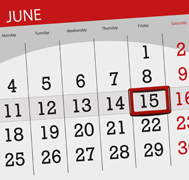
    The 2018 tax deadline for sole proprietors and partnerships is on June 15, 2018. Have you filed yet?

    If not, don’t panic – you still have time. But it’s in your best interest to get your taxes filed by the deadline if you owe, or else you’ll be subject to Canada Revenue Agency (CRA) late-filing penalties, interest, and potentially worse consequences.

    The CRA late-filing penalty is 5% of your balance owing, plus 1% of your balance owing for each full month your return is late, up to a maximum of 12 months.

    What’s more, if you’ve been charged a late-filing penalty on your return for 2014, 2015, or 2016, your late-filing penalty could be even higher: 10% of your balance owing, plus 2% of your balance owing for each full month your return is late, up to a maximum of 24 months.

    Plus, if you’ve failed to report an income amount on your return for 2017 and you failed to report an amount on your return for 2014, 2015, or 2016, you may be subject to a federal and provincial repeated failure to report income penalty. These are equal to the lesser of:

    • 10% of the amount you failed to report on your return for 2017; and
    • 50% of the difference between the understated tax (and/or overstated credits) related to the amount you failed to report and the amount of tax withheld related to the amount of you failed to report.

    And then there’s the interest. Unfortunately, even though the self-employed tax deadline is on June 15, 2018, if you didn’t file your return before April 30, 2018 (the personal income tax deadline), you will already be accruing daily compound interest.

    The CRA starts charging interest on May 1, 2018 for any unpaid amounts owing for 2017 – and this includes your sole proprietor return. But you’ll still have to pay far less interest if you file by June 15, 2018 then if you don’t file at all.

    And last, but certainly not least, don’t forget the HST. If your sole proprietor or partnership gross revenue is exceeding $30,000 a year, you’ll also have to file a HST return once a year, usually when you send in your income tax return.

    If you haven’t filed already, what is stopping you?

    Some common reasons we hear about are lost receipts, unorganized books, or contractors knowing they won’t be able to pay.

    Whatever the reason, there is a solution – and it’s not avoiding the problem.

    If you don’t have receipts, retrace your steps. There might be receipts that have been emailed to you, or you may be able to get duplicate copies from the providers if you have a record of the transaction in your bank account. And there are some expenses you might not need receipts for. A qualified financial professional can help you know what is needed.

    If your books are unorganized, look for help. A qualified financial professional can help you find a more sustainable system.

    If you know you can’t pay, then you need to start looking at debt consolidation options. Again, that would be something a qualified financial professional could help you explore.

    In any case, you don’t want to bury your head in the sand. That will only make the situation worse and leave you in financial disrepair. Not only will you have to deal with late-filing penalties and interest, but it could also lead to CRA collections action, such as a frozen bank account, contacting your clients and telling them to send payments directly to the CRA, or even court action.

    Don’t miss the 2018 tax deadline. If you’re in a tight spot, DebtCare Canada can provide financial guidance to help you out.

    Call us today for a free consultation: 1 (888) 890-0888.

  • The 2017 Income Tax Deadline is Right Around the Corner – Will You Owe?

    The 2017 income tax deadline is looming — April 30, 2018 to be exact. Are you ready?

    There are two scenarios that can happen if you miss the 2017 income tax deadline.

    Scenario #1 —  you are owed money on your return. If you wait to file, this means you’ll have to wait longer to receive your refund — and why would you want to wait to get money back?

    Scenario #2 — You’ll owe a tax debt.

    If you owe a tax debt and miss the 2017 income tax deadline, not only will you still owe, but also that debt will continue to grow bigger the longer you wait. The Canada Revenue Agency (CRA) late filing penalty means interest builds up at an alarming rate. The CRA can begin charging compound daily interest on May 1 on any unpaid amounts owing for 2017. And then there’s the late-filing penalties.

    The CRA late-filing penalty is 5% of your 2017 balance owing, plus 1% of your balance owing for each full month your return is late to a maximum of 12 months. And if you’ve been charged a late-filing penalty in a previous year, you could be charged 10% of your balance owing, plus 2% for each full month your return is late for up to 20 months. That’s a lot of extra money to pay on top of the balance you already owe.

    So, what can you do instead?

    First, if you’ll owe a tax debt, even if you can’t pay the full balance owing on or before April 30, 2018, file your return on time. As we outlined above, if you miss the 2017 income tax deadline, you’ll only be subject to more fines and penalties, which doesn’t help anyone.

    Second, you’ll have to deal with the tax debt itself. Even when you file on time, you’ll still need to pay the tax debt. If you can pay it off in full when you file, do that. This will solve the problem before it starts and is the ideal scenario.

    If you file, but don’t pay the debt, the CRA will levy collection action against you, which could include a frozen bank account, wage garnishment, and even a lien on your property or other assets. It is in your best interest to pay your tax debt, even if you need to look into financial options to afford it.

    Remember, filing your taxes late and not paying your tax debt are two of the worst things you can do for your financial standing. There are better options available that can help you meet the deadline and make your payments.

    If you’ll owe a tax debt, but can’t afford to pay, DebtCare Canada can help you assess your options. Contact us for a free consultation before the 2017 income tax deadline by calling 1-888-890-0888 or visit us online at www.debtcare.ca.

  • Canada Revenue Agency Got You Down? Here Are Some Tips for Dealing with the Tax Man

    Dealing With The Tax ManOwing money to the Canada Revenue Agency is by far one of the scariest financial challenges that many Canadian taxpayers face. The Canada Revenue Agency is not an average creditor because they are part of the federal government. They have significant authority with respect to enforcing tax compliance and collecting tax debts.

    This authority includes (without a court order or notice to you):

    1. Pursuing criminal charges under the Income Tax Act
    2. Imposing penalties
    3. Imposing interest
    4. Notionally assessing your income even when you don’t file a return
    5. Garnishing your wages
    6. Freezing your bank account
    7. Placing a lien on your home
    8. Placing a lien on other property
    9. Garnishing your company’s receivables, and more….

    The Canada Revenue Agency can be ruthless. If you have a tax debt that you can pay, you must be very careful. The Canada Revenue Agency may seem amiable and willing to make a payment plan with you. They will send you a request for financial disclosure. On the financial disclosure you will have to tell them where you live, where you work, provide all sources of income, provide all assets, banking information and more… You may complete this form being open and honest indicating all of your liabilities and payment and then based on what cash flow is left, promise a payment plan.

    Once the Canada Revenue Agency receives your financial disclosure they will know all of your assets, where you bank, where you work – you will be completely exposed. Also, when the CRA reviews your budget and sees payments to other creditors like loans and credit cards, they will exclude them from the budget and ask you for significantly more in terms of a monthly payment than you are comfortable with.

    This will leave you in the worst position – Who do you pay? What about your credit? What about your family? What about your job? This is how the human aspect of having a tax debt can be sometimes even more impactful than the financial consequences. Many taxpayers suffer with medical problems that stem from stress associated with an inability to pay a tax debt.

    Listen, you cannot draw blood from a stone and there are many reasons why Canadian taxpayers find themselves unintentionally in trouble with the Canada Revenue Agency. A good financial consultant can guide you through programs that are available that can stop CRA collections and help you deal with your tax debt. Attempting to negotiate directly with the CRA will often lead to increased exposure so the best thing you can do if you have a tax debt you can’t pay is seek professional help.

    If you need help with a Canada Revenue Agency tax debt contact DebtCare Canada online or call 888-890-0888.

  • Wage Garnishments in Canada – How to Stop a Garnishment on Your Wages

    Thousands of Canadians have their wages garnished each year. In the past few years there have been more instances of individuals having their wages garnished because of the turbulent economy. Wage garnishments in Canada occur when one party believes that another party owes him or her money and pursues enforcement action.

    Wage garnishments in Canada are generally issued in one of three ways.

    The first most common reason a wage garnishment is issued is when a debt is owed to the government and the individual is unable to make a satisfactory, voluntary repayment arrangement. Some examples of this are: tax debt owed to The Canada Revenue Agency or The Minister of Finance or a debt owed to the Province and/or Federal Government for an unpaid student loan. If the government wants to place a garnishment on your wages, they don’t have to obtain a court order to do so. If you want to know how to stop a garnishment on your wages, the answer is pretty much black and white. You either have to make an acceptable voluntary repayment plan with the government so that they agree to lift the garnishment on your wages or participate in a Federal Government program to seek debt relief. Wage garnishments that are issued by the government can be applied at up to 100% of your wages.

    The second most common reason that a wage garnishment is issued is when one party sues another party in the Superior Court of Justice and is awarded judgement. Once awarded judgement he or she can apply to garnish the individual’s wages. A common occurrence is when an individual defaults on a debt to a creditor and then the creditor sues him or her in the Small Claims Court. When a wage garnishment is issued through the Small Claims Court in Ontario your wages can be garnished up to 20% of your net earnings. If you want to know how to stop a wage garnishment issued by the Superior Court you have three choices. Make a voluntary payment plan arrangement with the party who sued you where they agree to lift the wage garnishment, to make a motion to the Court offering a voluntary payment plan and asking that the wage garnishment be set aside, or by applying to a Federal Government program for debt relief.

    The third most common reason wage garnishments are issued is as a result of child support arrears. If you want to know how to stop a wage garnishment for child support arrears you have only one choice and that is to apply to the Court to have it removed. This can be very challenging to accomplish. A Federal Government program will not stop a wage garnishment for unpaid child support.

    The fastest most effective way to stop a wage garnishment is through a Federal Government program. The benefit achieved by leveraging a Federal Government program to stop a wage garnishment is that the garnishment will be stopped, interest will be frozen, in many cases you can have the principal amount of the debt that you owe reduced and make a voluntary monthly payment.

    Participating in a Federal Government program will require that you include all debt that you owe. If you have debt to other creditors like credit card providers, loan providers, unpaid cell phone bills etc., these debts will also be covered under the Federal Government program. This will mean that they too will have their interest frozen and in many cases the principal debt reduced. In the event that you had several debts you would make a single monthly payment under the Federal Government program.

    If you are having a financial problem and your wages are being garnished it could lead to increased financial hardship. You don’t have to suffer and there are options available.

    For more information about wage garnishments in Canada and how to stop a garnishment on your wages please contact Michael Goldenberg at DebtCare Canada by calling 416-907-2582 or visit www.debtcare.ca.