
debtcare.ca

Tag: cra collections

  • Requirement to Pay – If You Received One, Act Before Life Gets Uncomfortable

    A requirement to pay is one of the most uncomfortable forms of debt collection you can receive.

    A requirement to pay can be:

    • Sent directly to your employer (as a wage garnishment) so your employer will have to send a portion of your paycheque directly to the CRA. This can be embarrassing as now your employer will know you owe a tax debt.
    • Sent directly to your clients if you are self-employed or a sole proprietor. This is embarrassing and can also be damaging to your business if your clients switch to a competitor because they are worried about your financial situation.
    • Sent directly to the bank so the funds will be taken out of your bank account. You will be in for a shock when you go to access your account and find less in there than you expected, which could put you into financial trouble in other areas of your life.

    In any of these situations, a requirement to pay can make your life extremely uncomfortable at best, and at worst can result in long-lasting consequences that affect your reputation, finances, and livelihood.

    The solution? Take action — fast.

    Like any CRA collection action, a requirement to pay can be stopped by:

    • Paying the tax debt in full — however, this may not be an option if you don’t have the money available.
    • Filing for a consumer proposal or bankruptcy.
    • Working with a tax debt counsellor, like DebtCare Canada.

    The worst thing you can do is try to negotiate with the CRA yourself. At best, you will still have to pay the text debt in full and in a timely fashion, and at worst you may reveal information that allows the CRA to issue more requirements to pay.

    The better option is to work with a debt counsellor. For instance, at DebtCare Canada we offer one of the only programs that resolves CRA back taxes, including stopping collection action in its tracks.

    If you’ve received a requirement to pay from another creditor, we can help, too. We will work with you to stop the collection action as quickly as possible so you can avoid costly consequences — both financial and reputation-wise.

    If you’ve received a requirement to pay, don’t wait. Act now.

    Contact us for a free consultation. Call 1-888-890-0888 or visit www.debtcare.ca.

  • Don’t Let the CRA Spook You – How to Stop a CRA Wage Garnishment

    With Halloween around the corner, we’re thinking about all of the scary financial situations that Canadians might face. And one of those that tends to spook people the most is a Canada Revenue Agency (CRA) wage garnishment.

    The CRA has broad garnishment powers. They can issue garnishments on your employment income, your bank account, and even other forms of income, like pensions. If you are self-employed, they can send requirements to pay to your clients. And unlike other creditors, the CRA doesn’t need a court order to garnish you.

    There are four ways you can stop a CRA wage garnishment:

    1. Pay the debt in full. If you can take out a loan or have home equity to access, this might be the time to use it.
    2. Get the CRA to agree to remove the garnishment. This is very difficult to do once collection action is in place. If you do attempt to negotiate with the CRA, you shouldn’t do it alone.
    3. File for a consumer proposal.
    4. File for bankruptcy.

    If you don’t have a sizable sum to offer or the ability to pay the CRA through a loan or home equity, then filing for a consumer proposal or bankruptcy will immediately stop a wage garnishment.

    So, what is the difference between a consumer proposal and a bankruptcy?

    Consumer proposals:

    • Are for non-mortgage debts up to $250,000.
    • Make a settlement offer to your creditors. The majority of creditors must accept this proposal for it to go through.
    • Typically, will not require you to give up any assets.

    Bankruptcies:

    • Are for any amount of unsecured debt. There is no limit.
    • May mean that you have to give up your assets.
    • Leave you with the worst credit rating possible — an R9.

    These options may seem extreme, but if you are faced with a CRA wage garnishment, they can be the better choice. The CRA will be aggressive with their garnishments and will not stop until they have recouped the full amount — plus any interest or penalties you have accumulated. This could mean thousands of dollars (or more) in garnishments by the time all is said and done.

    In turn, that could leave you struggling financially for months, or even years, on end. You need your employment income to pay your other day-to-day expenses, so having up to 20% to 50% of it (or more) go to the CRA could mean going even deeper into debt to other creditors.

    At DebtCare Canada, we can help you explore your options for stopping a CRA wage garnishment in its tracks. We will look at your credit rating, financial standing, and debt management choices to make the best plan of action.

    Contact us today for a free consultation. Call 1-888-890-0888 or visit www.debtcare.ca.

  • CRA Collections and You – How You Can Protect Yourself

    Canada Revenue Agency (CRA) collections can be financially and personally devastating. Whether you’re hit with a wage garnishment, frozen bank account, or lien against your property, the effects can be far-reaching. It might impact your ability to pay your regular bills, alert your employer or clients to your financial position, or put your assets in jeopardy.
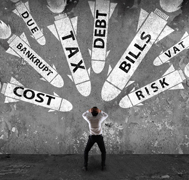
    CRA collections can begin without warning and without a court order.

    Often, when a person is hit with a CRA collection action, they ask, “How did the CRA find out my personal information?”

    The answer, usually, is that you told them.

    If you’re talking to the CRA, you need to be careful about what you voluntarily disclose. They can’t begin collection action unless they know where to collect from. For example, your bank account can’t be frozen if the CRA doesn’t know where you bank.

    One of the ways the CRA gets your personal information is through financial disclosure forms. For instance, say you wanted to make a payment plan with the CRA to pay your tax debt. You might directly contact the CRA to do so. They may indicate that they are willing to accept a three-to-six-month payment plan based on $500 per month if you fill out a form providing financial disclosure.

    This form might ask for information about your income, income sources, expenses, assets, liabilities, where you bank, and more. And now they have all this information on file. Even if they accept your payment plan this year, they might not be so lenient if it happens again in a following year. And now they will know where to collect from.

    There’s another added danger of providing this information: once they have your data, the CRA could go back on their original payment plan offer and demand a much larger monthly payment based on what you’ve disclosed.

    They may accept the lesser monthly payment for three-to-six months, but if they demand more, or if you don’t meet the payment plan obligations, the CRA will have all of your personal financial information that you provided in the financial disclosure form and can proceed to take enforcement action against you.

    They can also get your banking information in other ways. For example, if you make a payment to the CRA using your main chequing account and you still owe money, expect your bank account to get frozen.

    You also might unknowingly provide personal information just by talking with a CRA agent on the phone. Remember, they are trained to seem friendly, so you feel comfortable talking with them and revealing personal details. But the friendship isn’t all it seems. Once they have what they need, expect the CRA to turn to collection action.

    All of these reasons are why many agencies advise people who have large tax debts not to deal with the CRA directly. The CRA may say they are willing to negotiate, but they are agents hired by the government to collect the tax debt from you. Their primary objective is to close your file, which can only happen if you pay the amount in full (or you end up filing for a consumer proposal or bankruptcy).

    If you know you owe the CRA and can’t pay in full, you need a plan before even initiating contact.

    • Don’t contact the CRA on your own.
    • Don’t attempt to negotiate with the CRA.
    • Don’t fill out any financial disclosure forms they provide or answer other personal questions when speaking with an agent over the phone.

    Instead, contact a financial consultant to explore your options so you can get your CRA tax debt cleared before collection action is started.

    DebtCare provides access to one of the only programs that can resolve a CRA back tax problem. We can help you before the CRA registers a lien against your home, issues one of your customers a requirement to payorder, or freezes your bank account.

    Contact us today for a free consultation at 1-888-890-0888.

  • CRA Penalties, Interest, and More – What to Do if You Will Miss the 2017 Tax Deadline

    The 2017 income tax deadline is nearly a month away. April 30, 2018 is the date you must file by or be subject to Canada Revenue Agency (CRA) penalties, interest, and possibly collection action.

    Tax time can be a source of stress — gathering your receipts, filing your return, and worrying about whether you’ll owe can be a hassle that’s tempting to avoid. But like it or not, paying taxes is something that can’t be avoided and if you attempt to do so, the stress and consequences will only be worse.

    Consider this case, reported on the CRA website. On December 4, 2017 a Cobourg, Ontario man was sentenced to a fine of $97,173 after pleading guilty to two counts of tax evasion for failing to report income on his personal tax returns from 2006 to 2007. This court-imposed fine is only one part of what he must pay. He also has to pay the full amount of tax owing (an additional $97,173) PLUS related interest and any penalties assessed by the CRA.

    This is a cautionary tale, but it’s also not uncommon. Between April 1, 2012 and March 31, 2017, courts have convicted 408 people for CRA tax evasion. This involved $122 million in federal tax evaded and court sentences totaling approximately $44 million in court fines and 3,103 months in jail.

    If you’re worried you’ll miss the 2017 income tax deadline, here’s what to do instead:

    1. File Before April 30, 2018

    If you’re owed money and you don’t file before the 2017 income tax deadline, you’ll just have to wait longer for your refund — and who wants that? Even if you’ll owe a tax debt, it’s better to file before the deadline to avoid CRA penalties.

    Interest begins accumulating on your tax debt on May 1, 2018 at a daily compounded rate. And on top of the interest, you’ll have to pay the CRA late-filing penalty.

    The CRA late-filing penalty is 5% of your 2017 balance owing, plus 1% of your balance owing for each full month your return is late to a maximum of 12 months. And if you’ve been charged a late-filing penalty in a previous year, you could be charged 10% of your balance owing, plus 2% for each full month your return is late for up to 20 months. That’s a lot of extra money to pay on top of the balance you already owe. It’s in your best interest to file by April 30 and avoid the CRA penalties.

    1. Make a Plan to Pay

    If you can afford it, paying your tax debt in full is the best option for avoiding CRA penalties. Look at your budget and see where you can save to pay the tax debt.

    If you absolutely can’t pay in full with your current income, you may have other options available to you. For example, if you own a home with equity available and have good credit, you could be eligible for a home equity loan, which would allow you to pay off your tax debt and then pay your loan off over a fixed repayment schedule. If you don’t own a home, or don’t have equity available, there could be other lending options that you can access.

    Don’t share your income and expenses with CRA. Get a plan together first.

    1. Seek Professional Help

    If you’re going to miss the 2017 income tax deadline because you can’t pay your tax debt, even with a loan, consult a financial professional. Debt counsellors can help you go over your options, see what options are available to you, and help prevent or stop CRA collection action. Burying your head in the sand isn’t going to change your situation and will actually make it worse. If you’re not sure what to do, a professional debt consultant can help you find the way.

    DebtCare Canada can help you avoid the consequences of CRA penalties.

    Call us for a free consultation at 1-888-890-0888 or visit us online at www.debtcare.ca.

  • Question Corner: When Will CRA Garnishment Happen to Me if I Owe?

    The 2017 income tax deadline is looming on April 30, 2018 and with it the consequences of not paying a tax debt in full. One such consequence if you fail to pay a tax debt is Canada Revenue Agency (CRA) garnishment.

    A CRA garnishment is just one of several scary collections tactics that can happen if you fail to pay your taxes. CRA can garnish up to 50% of your employment income and 100% of your other income, such as contracts or pensions, simply by sending a letter to your employer, or your clients if you are self-employed. The person who receives this letter is legally obligated to send your money straight to CRA or they could face court action.

    Unlike other creditors, the CRA doesn’t need a court order to obtain a wage garnishment. And, scarier still, you may not even know when a CRA wage garnishment will start.

    A CRA garnishment can start any time after the 2017 income tax deadline once CRA has processed your income tax return and provided you with a notice of assessment. This is where you will see the exact amount that you owe.

    If you can’t pay the tax debt in full, that’s when wage garnishment and other collection tactics can begin. You may be able to make a payment arrangement with CRA, but this is nearly impossible for an individual to do on their own. And even if you are sending payments to CRA, they may still garnish.

    If you don’t pay your tax debt and CRA finds out where your income comes from, you are at risk for a wage garnishment.

    CRA can find out your income source in many different ways, such as:

    • You tell CRA or name your employer on a budget or disclosure forms given to CRA.
    • Tax filings by your employer(s).
    • Your client or supplier is audited.
    • And many more.

    There are options to stop a CRA wage garnishment depending on your income, assets, and debt. Some of these options will immediately stop a wage garnishment. Debt consulting companies, such as DebtCare Canada, can assess personal circumstances and arrange whatever solution is the right one.

    Don’t wait – call DebtCare today. We can walk you through the various options and help you avoid a CRA garnishment. 1-888-890-0888.

  • The 2017 Income Tax Deadline is Right Around the Corner – Will You Owe?

    The 2017 income tax deadline is looming — April 30, 2018 to be exact. Are you ready?

    There are two scenarios that can happen if you miss the 2017 income tax deadline.

    Scenario #1 —  you are owed money on your return. If you wait to file, this means you’ll have to wait longer to receive your refund — and why would you want to wait to get money back?

    Scenario #2 — You’ll owe a tax debt.

    If you owe a tax debt and miss the 2017 income tax deadline, not only will you still owe, but also that debt will continue to grow bigger the longer you wait. The Canada Revenue Agency (CRA) late filing penalty means interest builds up at an alarming rate. The CRA can begin charging compound daily interest on May 1 on any unpaid amounts owing for 2017. And then there’s the late-filing penalties.

    The CRA late-filing penalty is 5% of your 2017 balance owing, plus 1% of your balance owing for each full month your return is late to a maximum of 12 months. And if you’ve been charged a late-filing penalty in a previous year, you could be charged 10% of your balance owing, plus 2% for each full month your return is late for up to 20 months. That’s a lot of extra money to pay on top of the balance you already owe.

    So, what can you do instead?

    First, if you’ll owe a tax debt, even if you can’t pay the full balance owing on or before April 30, 2018, file your return on time. As we outlined above, if you miss the 2017 income tax deadline, you’ll only be subject to more fines and penalties, which doesn’t help anyone.

    Second, you’ll have to deal with the tax debt itself. Even when you file on time, you’ll still need to pay the tax debt. If you can pay it off in full when you file, do that. This will solve the problem before it starts and is the ideal scenario.

    If you file, but don’t pay the debt, the CRA will levy collection action against you, which could include a frozen bank account, wage garnishment, and even a lien on your property or other assets. It is in your best interest to pay your tax debt, even if you need to look into financial options to afford it.

    Remember, filing your taxes late and not paying your tax debt are two of the worst things you can do for your financial standing. There are better options available that can help you meet the deadline and make your payments.

    If you’ll owe a tax debt, but can’t afford to pay, DebtCare Canada can help you assess your options. Contact us for a free consultation before the 2017 income tax deadline by calling 1-888-890-0888 or visit us online at www.debtcare.ca.

  • Does CRA Collections Need a Court Order to Take Enforcement Action?

    When you owe money to the Canada Revenue Agency, it is very different from owing money to a regular creditor, but at the same time very similar. While a regular creditor can indeed take measures to collect the debt, the same measures taken by the CRA, CRA collections doesn’t need to follow the same route. A regular collections agency has to take certain steps before taking enforcement action against you, most notably obtaining a court order. CRA collections does not.

    That’s right; CRA collections can levy enforcement action, including freezing your bank account, garnishing your wages, even placing a lien on your home, without first acquiring court approval.

    Furthermore, they don’t need to make you aware of the enforcement action.

    Once CRA collections has taken enforcement action, the only way to have it removed (other than paying the debt in its entirety) is through a consumer proposal or bankruptcy.

    In a consumer proposal, a proposal is made to your creditors – in this case the CRA – based on a calculation of your debt, income and expenses. If the CRA accepts the proposal, you make a single monthly payment and interest is stopped. As soon as the consumer proposal is filed, enforcement action is stopped. In many cases, not only will the consumer proposal stop enforcement action and interest, it may also reduce the overall amount of your tax debt. Often repayment of a consumer proposal takes 5 years – a much longer period of time (and thus lower monthly payments) than the CRA would accept had you called to negotiate directly with them.

    In the case of a bankruptcy, the process is different. You do not make a proposal to the CRA. In a bankruptcy (first time), an income calculation is done and a reasonable monthly payment amount is established. Once filed, you will pay monthly for 9 or 21 months, depending on your income. Once you have completed the terms of the bankruptcy – paying monthly, disclosing all income, paying any surplus income, participating in credit counselling – you will receive your discharge and can begin rebuilding your credit. As with a consumer proposal, as soon as the CRA is notified of your bankruptcy, collection action will stop.

    While both a consumer proposal and bankruptcy are administered by a trustee in bankruptcy, we don’t recommend going directly to a bankruptcy trustee. The trustee is not your representative alone and anything disclosed to them will also be shared with the CRA. The best approach is to speak with a financial consultant first, one who can manage this process and can be trusted to keep your financial information confidential as you formulate a plan.

    At DebtCare, we can help you develop a strategy to protect yourself. Call us first: 1-888-890-0888.


  • CRA Collections Calling You at Work? How to Stop it Now!

    debt1Spring is fast approaching, and that means the snow may still be holding on but it is getting weaker and weaker. With winter on the way out, that means the tax season is just around the corner. However, if you are currently sitting on a tax debt, you may be months into your tax season, dealing with CRA collections on a regular basis.

    If you owe the Canada Revenue Agency, be it from the 2014 tax year or earlier, you are likely well aware of the fact that these agents do not give up. CRA collection agents are relentless, and will try at every turn to obtain any money they believe is owed to them. This may involve calling you at home, bombarding you with official letters, or even calling you at work, which is never good for business!

    Can’t these phone calls be stopped? There is a Taxpayer Bill of Rights that addresses harassment, but as long as agents are following it they can still use tactics that are embarrassing and may feel harassing (even if they are not actually considered harassment). The only real way to stop the phone calls is to deal with the debt.

    So, what are your options?

    1. Pay your debt in full. We hope that if this were an option you would have already taken it, since interest accrues at an alarming rate on a CRA debt. If you’ve been holding out in the hopes that the debt will just disappear rather than dipping into the savings account, we strongly urge you to reconsider.
    2. Get a loan to pay the debt. If you only owe a small amount, this can work, but often tax debts are massive, in which case an affordable monthly payment may be impossible.
    3. Refinance your house to pay the debt. Many people do this, as it is a viable option, usually with lower interest, but you need to do it before a lien is placed on the home (a very common enforcement action taken by the CRA).
    4. Consumer proposal. If refinancing is not an option, and a loan doesn’t make sense, you may want to consider a consumer proposal to get rid of the debt. This will mean one payment, a stop to interest, a stop to collections and sometimes an overall reduction of the debt.

    So what is the best option for you? If you want to stop CRA collections, the best option depends on your unique circumstances, and this is best determined after a consultation with a financial specialist. Someone with the expertise and experience working with CRA collections and tax debts can help you determine the best route for success.

    At DebtCare, we can help you find that route. Call us today at 1-888-890-0888.