debtcare.ca

Tag: tax deadline

  • April Showers Bring May CRA Tax Debt… April 30 is the Income Tax Deadline

    The 2018 Canadian income tax deadline is almost here. On April 30, 2019, all personal taxes must be filed for the 2018 tax year. If you miss this deadline, you will officially be a late filer in the eyes of the Canada Revenue Agency (CRA).

    When you file taxes late, and you owe a balance, not only will you still have to pay the principal tax debt, but you’ll also have to cover interest and penalties. These additional costs can add up quickly.

    In 2019, here’s what you could end up owing:

    Interest

    • The CRA charges compound daily interest starting May 1, 2019, on any unpaid amounts owing for 2018. This includes any balance owing if the CRA reassesses your return. In addition, the CRA will charge you interest on the penalties starting the day after your filing due date. The rate of interest the CRA charges can change every three months.
    • If you have amounts owing from previous years, the CRA will continue to charge compound daily interest on those amounts. Payments you make are first applied to amounts owing from previous years.

    Late-Filing Penalty

    • If you owe tax for 2018 and you file your return for 2018 after the due date of April 30, 2019, the CRA will charge you a late-filing penalty of 5% of your 2018 balance owing, plus 1% of your balance owing for each full month your return is late, to a maximum of 12 months.
    • If the CRA charged a late-filing penalty on your return for 2015, 2016, or 2017, your late-filing penalty for 2018 may be 10% of your 2018 balance owing, plus 2% of your 2018 balance owing for each full month your return is late, to a maximum of 20 months.

    Repeated Failure to Report Income Penalty

    • If you failed to report an amount on your return for 2018 and you also failed to report an amount on your return for 2015, 2016, or 2017, you may have to pay a federal and provincial or territorial repeated failure to report income penalty.
    • If you did not report an amount of income of $500 or more for a tax year, it will be considered a failure to report income.
    • The federal and provincial or territorial penalties are each equal to the lesser of:

                 – 10% of the amount you failed to report on your return for 2018;  

                 – 50% of the difference between the understated tax (and/or  overstated credits) related to the amount you failed to report and the amount of tax withheld related to the amount you failed to report.

    If you owe a tax debt that you won’t be able to pay, the right answer is to file anyway.

    Once you are filed and have your assessment, you’ll need to deal with the tax debt. This is also best to do before the April 30, 2019 deadline.

    If you can’t pay, get in contact with a debt consultant that has a CRA-specific program. For example, at DebtCare Canada, we have access to one of the only programs in Canada that can resolve a CRA back tax problem. We also have other financial solutions, like debt consolidation, home equity financing, and insolvency filing options.

    It can’t be reiterated enough — do not miss the Canadian tax deadline.

    For a refresher, here are the 2019 filing dates:

    • April 30, 2019: filing deadline for personal income tax.
    • June 17, 2019: self-employed or sole proprietor tax filing deadline.*

    *A note for those who are self-employed: while technically the filing due date for sole proprietors isn’t until June 17, the CRA will begin charging interest on any amounts owing on May 1, 2019. Therefore, it is also in your best interest to file before April 30, 2019.

    Have questions about filing or dealing with a tax debt? DebtCare Canada is here to help.

    Contact us today for a free consultation. Call 1-888-890-0888 or visit www.debtcare.ca.
  • 2018 Tax Deadline for Contractors Coming Up

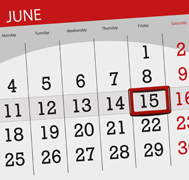
    The 2018 tax deadline for sole proprietors and partnerships is on June 15, 2018. Have you filed yet?
    If not, don’t panic – you still have time. But it’s in your best interest to get your taxes filed by the deadline if you owe, or else you’ll be subject to Canada Revenue Agency (CRA) late-filing penalties, interest, and potentially worse consequences.

    The CRA late-filing penalty is 5% of your balance owing, plus 1% of your balance owing for each full month your return is late, up to a maximum of 12 months.

    What’s more, if you’ve been charged a late-filing penalty on your return for 2014, 2015, or 2016, your late-filing penalty could be even higher: 10% of your balance owing, plus 2% of your balance owing for each full month your return is late, up to a maximum of 24 months.

    Plus, if you’ve failed to report an income amount on your return for 2017 and you failed to report an amount on your return for 2014, 2015, or 2016, you may be subject to a federal and provincial repeated failure to report income penalty. These are equal to the lesser of:

    • 10% of the amount you failed to report on your return for 2017; and
    • 50% of the difference between the understated tax (and/or overstated credits) related to the amount you failed to report and the amount of tax withheld related to the amount of you failed to report.

    And then there’s the interest. Unfortunately, even though the self-employed tax deadline is on June 15, 2018, if you didn’t file your return before April 30, 2018 (the personal income tax deadline), you will already be accruing daily compound interest.

    The CRA starts charging interest on May 1, 2018 for any unpaid amounts owing for 2017 – and this includes your sole proprietor return. But you’ll still have to pay far less interest if you file by June 15, 2018 then if you don’t file at all.

    And last, but certainly not least, don’t forget the HST. If your sole proprietor or partnership gross revenue is exceeding $30,000 a year, you’ll also have to file a HST return once a year, usually when you send in your income tax return.

    If you haven’t filed already, what is stopping you?

    Some common reasons we hear about are lost receipts, unorganized books, or contractors knowing they won’t be able to pay.

    Whatever the reason, there is a solution – and it’s not avoiding the problem.

    If you don’t have receipts, retrace your steps. There might be receipts that have been emailed to you, or you may be able to get duplicate copies from the providers if you have a record of the transaction in your bank account. And there are some expenses you might not need receipts for. A qualified financial professional can help you know what is needed.

    If your books are unorganized, look for help. A qualified financial professional can help you find a more sustainable system.

    If you know you can’t pay, then you need to start looking at debt consolidation options. Again, that would be something a qualified financial professional could help you explore.

    In any case, you don’t want to bury your head in the sand. That will only make the situation worse and leave you in financial disrepair. Not only will you have to deal with late-filing penalties and interest, but it could also lead to CRA collections action, such as a frozen bank account, contacting your clients and telling them to send payments directly to the CRA, or even court action.

    Don’t miss the 2018 tax deadline. If you’re in a tight spot, DebtCare Canada can provide financial guidance to help you out.

    Call us today for a free consultation: 1 (888) 890-0888.

  • Missed the 2015 Tax Deadline – Here is what to expect next

    debt1April showers have brought May flowers…but if you missed the 2015 tax deadline this month may also bring with it a tax debt, accompanied by penalties and interest. When it comes to penalizing Canadians for late filing, the Canada Revenue Agency doesn’t fool around – and you shouldn’t either.
    In Canada, the 2015 tax deadline was April 30th, and if you, like many others, missed it, here is what you can expect:

    • If you owe for 2015 and didn’t file on time, you can expect to be charged a late-filing penalty of 5% of your balance owing, plus 1% of your balance owing for each full month your return is late, to a maximum of 12 months.
    • Additionally, if you missed the deadline and were charged a late-filing penalty on your return for 2012, 2013, or 2014, your late-filing penalty for 2015 may be 10% of your 2015 balance owing, plus 2% of your 2015 balance owing for each full month your return is late, to a maximum of 20 months.

    Once penalties are leveraged, they will continue to accumulate and then interest is added to the debt and the penalties. You can also expect, once that assessment arrives in the mail, to start receiving notices to file your returns and pay the debt.

    Not filing is not an option. If you choose not to file, you can be pursued for tax evasion and the CRA can arbitrarily assess you. This is done by looking at your current occupation and making an income estimate based on the industry standard. If you are assessed a debt based on the income the CRA thinks you earned, penalties and interest will also be applied.

    So you file, but still don’t pay the debt. The next step the CRA will take is to levy collection action, which may include a frozen bank account, a wage garnishment, even a lien on your property.

    When it comes to stopping collection action, or avoiding it altogether, your best bet is to pay the CRA in full. If the amount is not readily available, you may consider refinancing your mortgage or obtaining a personal loan. Another option may be reaching an agreement on repayment, but the CRA is not interested in lengthy terms – it wants to be paid back as soon as possible.

    If you can’t pay, and owe enough that you would not reasonably be able to make payments to pay off the debt, in full, in 12 months, move on to plan C – in a situation where you have no assets or you have assets that have no equity, a consumer proposal may be the best option. It will result in a single payment, halted collection action, halted interest accumulation and often is the only way to reduce the principle on a tax debt.

    If you are interested in discussing your options, DebtCare is here to help. We know what the CRA wants to see with regard to repayment or consumer proposal settlements and can help you achieve the best results.

    Call us today at 1 (888) 890-0888.


  • Missing the CRA Tax Deadline Will Cost You…

    debt2The 2015 CRA tax deadline is fast approaching – April 30th is less than 2 weeks away! That means that your income taxes need to be filed before this date or you’ll be facing penalties and interest if you owe a tax debt.

    If you have a balance owing for 2015, the CRA will charge compound daily interest starting May 1, 2016, on any unpaid amounts owing for 2015.If you have amounts owing from previous years, compound daily interest will continue to be charged on those amounts. Payments you make are first applied to amounts owing from previous years.

    The CRA late filing penalty is as follows:

    If you owe tax for 2015 and don’t file your return for 2015 on time, you will be charged a late-filing penalty of 5% of your 2015 balance owing, plus 1% of your balance owing for each full month your return is late, to a maximum of 12 months.

    If you were charged a late-filing penalty on your return for 2012, 2013, or 2014, your late-filing penalty for 2015 may be 10% of your 2015 balance owing, plus 2% of your 2015 balance owing for each full month your return is late, to a maximum of 20 months.

    Yes, those penalties will really add up quickly – and can easily become larger than the initial tax debt if left long enough.

    If you are thinking about missing the deadline because you know that you will owe but can’t pay right now – this is not the way to go. Owing money to the CRA is not a criminaloffense, but not filing your returns is a criminal offense (this is considered tax evasion) and can land you in more than financial trouble – average Canadians are prosecuted every day as a result.

    If you don’t file, how does the CRA know if a debt is owed. Even if you don’t file, the CRA does perform “arbitrary” assessments where estimates of your income are used to determine what should have been paid. Remember, your employer will file and thus the CRA will be aware that you earned income for the year.

    If you can’t pay and don’t know what to do, file and then get some financial help. Your first step is to consult a financial professional who can review your income and finances and leverage that to help you achieve a payment arrangement with the CRA that you can live with. This could mean financing or it could mean leveraging other means to stop the CRA from coming after you.

    Assuming the CRA will not come after you is never a smart approach – it will.

    Stop penalties and interest from accruing today by calling DebtCare. We will help you sort things out: 1 (888) 890-0888.


  • Contractors – The 2015 Tax Deadline is Approaching

    2015 tax deadlineA great deal has changed in the working world with the boom in “contracting”. It used to be that companies would hire workers and pay them as employees. This has changed dramatically over the past 20 years. By contracting a worker, employers no longer have those strings, responsibilities and obligations that come with having an employee.

    Where contractors are concerned, a job is a job, however contract positions can prove to be a major headache when tax time comes if you are not good about keeping your books.

    The 2015 tax deadline is approaching – are you ready? If this is your first year filing as a contractor, here are some tips:

    • Try your best to organize your receipts and invoices.
    • If you haven’t been saving them, request bank statements and credit card statements. This will at least show deposits and give you an idea of what you spent.
    • Find a bookkeeper. If your receipts are all in a pile, or in a box, or worse, you don’t have any, a bookkeeper is your cheapest solution. If you bring your box of loose records to an accountant you will likely pay more to have them organized than you would through a bookkeeper.
    • If you have not registered a business, make sure that you get a T2200 from your employer. The T2200 allows you to claim personal expenses in accordance with your job.
    • Make sure that you have collected your T forms. If you are a contractor likely your employer will give you a T4A, but there are other T slips to consider. If you are in a union they will issue a T slip for your union dues, which are tax deductible. There may also be another T slip from the company that contracts you or from the union if you are in one related to taxable benefits (which are monies you may have received which are taxable).
    • Make sure you consider all expenses you incur to fulfill your contract – and do not write off things you are not entitled to. So many people do this and this will land you in real trouble with CRA later.

    Our next major tip regarding the upcoming June tax deadline: don’t miss it! If you miss it and this is your first time filing late you will pay a 5% fee on the amount that you owe, plus 1% per month for up to 12 months. Interest will accrue on top of both the tax debt and penalties.

    If you filed late in the 3 years preceding this year the penalty may increase to 10% of the amount of the tax debt, then 2% per month for up to 20% plus interest.

    If you are currently behind a couple of years filing, now is a better time than ever to get compliant! Did you know that you can’t claim HST input tax credits more than 4 years retroactively? This is a huge incentive to get filing in order.

    Now, add to this the fact that not filing your tax returns is tax evasion and could land you with a criminal problem, and tax time turns into a nightmare! Don’t believe us? Look how many people have already been prosecuted this year alone for tax evasion http://www.cra-arc.gc.ca/nwsrm/cnvctns/menu-eng.html.

    Typically people avoid filing tax returns for 3 reasons: 1)They don’t think that they are going to owe 2)They know they will owe and want to buy time 3)They have no records and don’t know how to go about filing.

    If you are coming up to the June deadline and fall into the second or third groups, you should seek out professional guidance ASAP. A tax debt is a financial problem with severe consequences. You can’t ignore it because it won’t go away by itself and the more time that passes the greater the consequences.

    Fortunately there is still time! Call DebtCare Canada today and we can help you get those tax debts straightened out: 1-888-890-0888.

  • Income Tax Time is Here – Preparing for the 2015 Tax Deadline

    2015 tax deadlineCanada’s income tax deadline for the 2014 tax year is right around the corner! While some anticipate refunds and are off to file with bells on, others are dreading this date and even considering not filing because of a tax debt that will follow.

    First of all, if you think you will owe, not filing is not the answer. You may think it will buy you time, but really all it will buy is penalties, interest and a bad history with CRA. If you think you will owe, be realistic about what you will owe and your ability to repay.

    Now, it is true that once you file CRA will ask you to pay the debt in full. With that said, CRA has been known to accept payment plans of up to 24 months on a tax debt. While there is no guarantee that this will happen for you, it has happened for others.

    If you took the amount of your tax debt and divided it by 24 months, would you be able to afford to repay the debt?

    If the answer is yes, the next steps you take are crucial.

    Negotiating directly with CRA can be dangerous. Before agreeing to any monthly payment arrangement they will ask for full disclosure of your assets, income, income sources, debt and more…

    The challenge here is that they may agree to payments over a 6 month period, based on a 24 month repayment, and then at the end of 6 months take the option to re-review your financial information. At this point they can reject renegotiating the monthly payments, demand payment in full and then use the information in your financial disclosure to take collection action against you.

    Another common occurrence is that when you submit an honest budget which includes your minimum obligations to other creditors, the CRA may then reject those payments and say that any surplus funds which could be directed to other creditors need to be directed to CRA. Even with all of this said, you absolutely do need to do something.

    If the answer was no…

    If you know that repaying the debt monthly, even over 24 months, is highly unlikely, you need to get some financial assistance immediately. A professional experienced with financial restructuring may be able to come up with a solution where you can repay the debt over a longer term, say 5 years.

    In either scenario…

    In either case, professional help is a necessity. Negotiating with CRA is, to be frank, too dangerous financially. Financial professionals with knowledge regarding dealing with CRA know how to navigate the bureaucracy and protect your information.

    Don’t ignore a tax debt in the hopes that it will magically disappear – it won’t. Call DebtCare Canada today: 1-888-890-0888.

  • Tax Deadline – Have a Plan if You Cannot Pay Before the CRA Knows It

    Tax DeadlineThe tax deadline is fast approaching – the deadline to file your 2013 return, as always, is April 30th – are you ready? Getting your returns in order and filing on time can sometimes be an annual hassle, but it can’t be avoided. Filing online is growing in popularity, and can be done from the comfort of your own home. But what if you miss the deadline – what are the consequences of this?

    If filing taxes seems like a hassle, then dealing with the consequences of missing the tax deadline can seem like a nightmare, especially if you owe. Missing the deadline when you are owed money just means waiting longer to receive it (why would anyone want to do that?), but when you owe money, the Canada Revenue Agency (CRA) won’t wait – and that tax debt will just continue to grow the longer you wait to pay it.

    What are we talking about here? When you owe a tax debt, interest and penalties accumulate at an alarming rate, to the tune of 5% of the total tax debt plus 1% monthly for up to 12 months. Additionally, if you filed late in previous years, your penalty can increase to 10% of the total tax debt plus 2% monthly for up to 20 months. These additional charges are significant, and left unpaid can grow to become larger than the total debt you originally owed.

    Interest and penalties are not the only things that contribute to your tax debt becoming seriously problematic. Once the CRA knows that you owe, they can get pretty aggressive in their attempts to gather the money. Good cop, bad cop tactics to obtain your personal information, collection calls, and enforcement action (wage garnishments, frozen bank accounts) are all realistic and costly outcomes of a missed deadline and failure to pay.

    So, knowing all of this, how can you avoid the irksome effects? If you know that you are going to end up owing money to the CRA it is a smart idea to have a plan in place before they learn about it. Firstly, if you have the ability to pay the debt in full upon filing, great – do that. This will solve the problem before it starts and leave you in a fresh financial position tax-wise. However, if you don’t think you can pay the debt in full, getting a plan in place to do so is a very smart idea.

    For more information about avoiding the consequences of a missed tax deadline please contact DebtCare Canada by calling 1 (888) 890-0888 or visit us online at www.debtcare.ca